Feeds:
Posts
Comments

Be Holy

We pursue many things. We pursue our career goals. We strive to buy a nice house and furnish it comfortably. We actively seek out friends. We build a family. These are all worthy pursuits, but it is only half the story, isn’t it? If we allow ourselves to be truthful, we also run after unhealthy pursuits. Alcohol or drugs, sexual addictions, and coveting more and more material possessions are just the most obvious of the destructive pursuits that people chase. The question is, Will any of these pursuits fulfill you?

In contrast to the things that the average American chases these days, the Scriptures offer a quite different goal: pursue holiness. In I Peter 1 we find this new imperative: “be holy in all that you do” (NIV).

The connotation of the word ‘holy’ does not translate readily into our 21st century experience. As soon as we read this phrase from the first epistle of Peterr we instantly picture ourselves being commanded to wear orange robes with accompanying sandals like the Buddhist monks. We imagine that we will have to carry our black leather Bible under our arm wherever we go. We envision so many misconceptions about this word holiness that we miss what God wishes for us altogether.

So what does ‘holiness’ look like? It looks like Jesus.

Picture your life filled with so much love that people are drawn to you. Imagine having patience even in the midst of frustrating circumstances. See yourself as a person of peace and wisdom whom others seek out as a listening ear to their troubles. You will still be yourself. You will still love
fly fishing, still live in a home of your design, and still spend time with your lifelong friends. You need not change your wardrobe or carry a Bible and a soap box everywhere you go. In fact, when the Scriptures command each of us to ‘be holy, for I am holy’ (I Peter 1:15) it is really inviting us to be exactly who we were originally designed to be and nothing less.

Perhaps today, amidst all the demands you pursue, take time to reflect on the life of Jesus Christ as the quintessential exemplar of holiness. Make that your pursuit and you will find the fulfillment that your heart craves.

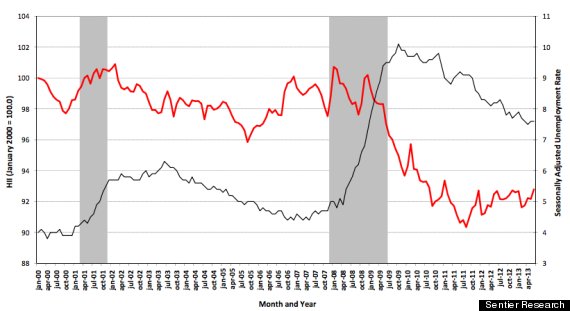
2013 INCOME-CHARTThe Huffington Post is reporting today (Aug 22, 2013) that “the average American household is earning less than when the Great Recession ended four years ago.” Make no mistake, these are still ‘hard times’ for many of us and our neighbors.

Here is one of my old sermons on Luke 21 entitled ‘Hard Times.’ I pray that in it you might hear God speak a word of comfort to you amidst such hard times.

Leadership is a subject about which I am passionate. The misconceptions and myths surrounding leadership have all too often convinced people that only the supremely special are leaders. The truth is that God has made all of us leaders. Here is a rerun of one of my favorite past sermons on leadership.

THE QUESTION OF EVIL

It has been a terrible year in America. We have endured a torrent of horrific violence that has shaken Americans to their core, namely, the shocking Aurora, CO shooting last July, then the senseless Sandy Hook massacre in December, after that the Boston Marathon bombing, and now the unimaginable decade-long abduction of three women in Cleveland. Through it all I have heard no one discussing the nature of evil.

Where have the questions been: What is evil? Where does it come from? What do we do about it?

We certainly want to be careful when talking about evil. There has long been an unfortunate entanglement between a diagnosis of mental illness and a judgment of evil. Long before modern medicine understood that a disease of the brain may cause irrational, even violent behavior, people explained such behavior as evil. The label ‘possessed by a demon’ was pinned on people whose behavior was inexplicable by any framework available to pre-modern people. We now know better.

In the Aurora shooting, the perpetrator was definitively clinically mentally ill. We will never know the mental health of Adam Lanza when he set out that day to his old elementary school. However, neither the Tsarnaev brothers nor Ariel Castro will be deemed mentally ill when they committed their monstrous crimes. Left with the horrors of these men’s actions, we try to wrap our minds around the question: how did this happen? Holmes was nowhere close to being in his right mind. Lanza may or may not have been rational during his rampage. The Tsarnaev brothers and Castro present a wholly different problem. There is no other way to explain their actions: what they did was evil, pure unadulterated evil.

Surely we never want to return to the misdiagnosis of suffers of mental illness as possessed by evil forces. Even though we now have powerful new insights into the nature of diseases of the brain, we still have not extinguished the questions surrounding the nature of evil. Our modern knowledge of mental illness does not mean that there is no such thing as evil. Complicating matters further, even in those who are undeniably mentally ill, what James Holmes and Adam Lanza did must also be judged as evil.

So, my question is just this: Why has no one been talking about evil? Why no national or even water-cooler discussions about the nature of evil? Why no queries about what evil is, or where evil comes from? Why has no one even breathed the word ‘evil?’

My definition of evil is straightforward: evil is a lie. At the very core of every single incident that you would label as evil, you will inevitably find a lie. This is why lies, of all sizes and shapes, are so troublesome. Lies always breed evil and evil always contains a lie.

Christianity proclaims that evil is in every single one of us. Every human being is capable of good and evil. It is the enduring human condition from which we are powerless to save ourselves. No self-help book, no therapy, no chanting, or trying, or willpower, or soul-searching pilgrimage can transform this fundamental reality. Evil resides in every heart, mine included, and we are powerless in and of ourselves to defeat it.

So, let me come full circle and try to answer my own question as to why there is no pervasive discussion about evil in this country in light of these otherwise inexplicable events. The discussion of evil would lead to a theological conversation. Talking about evil would invariably open up the philosophical debate about the nature of good versus evil, which leads directly to the whole question of God. In our thoroughly secular society no one seems to want to go there so the entire conversation about evil is shunned.

This should not be true of Christians. Christianity is the only religion or worldview that confronts the question of the nature of evil head on. Other religions and worldviews either sidestep the question or pretend there is no such thing as evil. Aurora, Sandy Hook, Boston, and Cleveland tell another story. There is indeed such a reality as evil.

Only in Christianity, has evil met its match. Only in the God who gave His only Son is there a cure to the problem of evil. Let us bear bold witness to Christ who has put evil under his feet while at the same time rolling up our sleeves to comfort the victims of evil doers.
VICTORY VS SUFFERING

Contemporary American folk theology is enamored with the theme of God’s victory. From nearly every pulpit in the last two years I have heard the resounding note of triumph and victory preached. Jesus will help you conquer _____ (fill in the blank). God will bless you with ________ (name your own desire). God is superior to ________ (fill in your current struggle).

Without question, the Scriptures proclaim the Good News that Jesus is victorious over sin, death, and the devil. We who believe have read the last page and know that in the end Satan is defeated and God reigns victoriously. All that is true. But what is strikingly neglected in the vast majority of American preaching in our generation is the other predominant theme of Holy Scripture, namely the reality of our suffering. Note the following verses as exemplars:

“For your sake we face death all day long; we are considered as sheep to be slaughtered” (Ps 44:22).

“In this world you will have trouble” (Jn 16:33)

“We must go through many hardships to enter the kingdom of God” (Acts 14:22)

“In fact, everyone who wants to live a godly life will be persecuted. . .” (II Tim 3:12)

“Naked I came from my mother’s womb, and naked I will depart. The LORD gave and the LORD has taken away; may the name of the LORD be praised” (Job 1:21).

The preacher who does not balance their proclamation with the truth of these verses does the congregation a disservice. And, I would strongly argue, such preaching harms our collective witness to nonbelievers. A life of faith is just as marked by suffering as any other human life. The preacher in Ecclesiastes says it best, “the rain falls on the just and the unjust alike.” The consistent preaching of victory without the balanced recognition of our inescapable suffering rings hollow, even false. It is not faithlessness to talk about our suffering. It is rather, a supreme act of faith and trust to publicly and courageously face our suffering head-on with trust in the One who will ultimately end all suffering forevermore. Christians should be known for spitting in the face of suffering and rolling up our sleeves and working to combat the suffering of our neighbors along with our own. What distinguishes Christianity from other world religions is that we do not turn a blind eye to suffering to focus on the romantic notions of panentheism and other untruthful optimisms.

Human life on this side of heaven is possessed of both triumph and tragedy, of victory and suffering. The Holy Scriptures tell this truth in a balanced way. Let us believers do likewise.

THE DARKNESS DOES NOT OVERCOME IT!

I have had numerous “favorite” Bible verses throughout my life. John 3:16, when I was just a small lad in Sunday School, Matthew 6:33 in college, Philippians 1:21 in my early 30’s, and many more through the years. Perhaps that is just as it should be. Certain verses speak with resonant clarity at various points in one’s lifetime.

In this stage of my life, were you to ask, I would tell you that John 1:5 is my “favorite” Bible verse: “The light shines in the darkness, and the darkness does not overcome it.”

I doubt this verse would make many people’s favorite list. That is okay with me. I particularly favor this word of comfort because I often struggle to understand why there is so much darkness in the world. Why does evil seem to get the upper hand so many times? In this my fifth decade of life, I look around and see everyone I know touched by some calamity or another. Physical illness, financial stress, relational dysfunction, addiction, and so many more problems afflict even God’s beloved children, my friends, my family, and my acquaintances alike. Add on top of that, senseless suffering like that caused by the act of terror at the Boston Marathon and one has to ask, Is the darkness winning? Truth be told, this is a very human response to all the mayhem and destruction we live through every day.

And then into these enduring questions comes the promise of God in John 1:5: “The LIGHT shines in the darkness, and the darkness does not overcome it.”

Wow, I need to hear that promise spoken. Over and over and over yet again. God promises you and me that evil may still rage about us, but it will not be victorious. Destruction and death are not the last word. Jesus, the Light of the World, cannot be extinguished no matter how dark the world or our lives seem to become some days.

I cherish this Good News. I cling to this Good News. I trust this Good News.

May Christ the Light of the World so shine through your life and mine today that the darkness is beaten back a little further than before.

LEADERSHIP IN UNEXPECTED PLACES

I have been reading lately from the history books of the Old Testament. It has been a long time since I have read through these biblical books of Samuel, Kings, and Chronicles. You know how it is . . . the New Testament is so fascinating that it monopolizes one’s Bible reading time. These past few years I have been translating from the Greek from Romans to Paul’s Epistles. Apparently I had forgotten the OT.

To be fair, it is easier to see God through the lens of his Son, Jesus Christ by reading the New Testament. Not that God cannot be seen or understood in the Old Testament. It just takes more work. Even so, it is rewarding.

I came across a powerful reminder of God’s modus operandi when I reread the story of God directing Samuel to choose a new king for Israel. Samuel was commanded to review the sons of Jesse and choose from amongst them the replacement for King Saul. Samuel must have been overwhelmed when he saw Eliab, Jesse’s oldest son. Apparently, he was tall and strikingly good looking. This has to be him, Samuel thought to himself. Until, that is, until God redirected him by reminding that the obvious choice is not always God’s choice. “Do not consider his appearance or his height, for I have rejected him. The Lord does not look at the things people look at. People look at the outward appearance, but the Lord looks at the heart” (I Samuel 16:7).

In the end, David, the youngest, smallest, least likely candidate, is God’s choice to be King. How like God!

The New Testament again reminds of God’s unlikely choices: “But God chose the foolish things of the world to shame the wise; God chose the weak things of the world to shame the strong. God chose the lowly things of this world and the despised things—and the things that are not—to nullify the things that are, so that no one may boast before him” (I Cor 1:27-29).

Leadership indeed comes in unexpected places. This is a biblical lesson even we faithful believers forget over and over and over again. We look to the obvious choice to be our next leader. We look to worldly criteria in making our decisions. Instead, God looks to the heart for it is the heart that gives the leader his strength, authority, and commission.

Is it unfaithful to doubt? You are certainly not alone if you have ever asked that question. Click below to listen my sermon on the subject.

WANDERING SAINTS

One of the great surprises of being out in the secular working world has been finding so many people who have left the Church. Oh to be sure, there are a fair number of folks who have wandered from God as a result of sin. That was as common to Jesus’ experience as it is to ours.  What troubles me lately, however, is just how many people I have met who describe themselves as deeply committed Christians, active followers of Jesus, who have little desire to have  anything to do with a congregation. I include in this list quite a large number of pastor colleagues and friends who are quite despairing about belonging to congregations.

In hearing these litanies of complaint, I have to lay a large part of the cause at the feet of congregations. It has often been said, usually tongue-in-cheek, that “the Church is the only army in the world that shoots its wounded!” That saying no longer makes me even smile; I find too much truth in it. Congregations, I have come to believe, need a very healthy dose, of II Chronicles 7:14 – a humbling, deeply introspective confession of the myriad of ways that we have forgotten our fellow believers, not listened to their pain, not chased after them in Christ’s love and cared for them. We are guilty of too quickly shrugging off their pain with pious phrases. We have failed to enter into their suffering with them. We have dismissed their complaints against the congregation and not tried to amend our collective sinful ways.

What is needed is the healing ministry style of Jesus Christ. This is one essential area where the congregation needs to engage the world – first by seeking the countless saints who have quietly left our ranks. Listening, loving, caring, befriending does not mean we water down truth. It does mean we humbly confess our faults and roll up our sleeves to change our attitudes and behavior.

The best story of pastoral care I ever heard was a story one of my professors told at seminary. When a certain wise pastor heard that one of his fellow believers was in pain, he just showed up at the door. Rather than try to soothe the pain with empty words and teaching, the gifted pastor simply stood on the doorstep and said, “I have come to cry with you,” and said nothing more.

Could we, every single one of us, baptized believers alike, go out and find our wandering brothers and sisters and simply cry with them? Could we go and say little, if anything, and just sit and listen to their stories of how congregations have hurt them and failed them? Could we each be Christ to these folks and gently be the Church for them?

Perhaps, if we made an effort like this, there would be a lot less wandering saints and our pews would be a lot less empty!

Preaching

Since I am no longer preaching every week I have been afforded a rare opportunity for a pastor: I can visit churches to hear the sermons of other preachers. All personal vanity aside, I have not liked what I have heard.

Mostly, I’ve been bored by the preaching that surrounds my home as my wife and I have tried scores of churches. Now I grant you, part of that boredom stems from my holding two graduate degrees in theology making my standards impossibly high. Added to that is seminary’s methodology for training preachers tends to inculcate a virulent judgmentalism towards other people’s preaching. All that aside, what has troubled me about the state of preaching these days is the insular world of the preacher and the resulting disconnect between the sermon and the lives of the people.

I have heard too many sermons so textually focused that the sermon has little relevance to the Monday to Saturday lives of the audience. This has made me wonder if pastors are spending too much time in their studies, too much time with other Christians, and too little time out in the world listening to what real life is like for their sheep. I have commenced a standard practice these days of admonishing every pastor/preacher I know to spend more time visiting the workplaces of their people to get a feel for their daily struggle. Then go write sermons that address God’s Word applied to that struggle.

Christians, at least from what I see here in Southern California, feel their workplace and public life has turned increasingly hostile to their faith. The gay marriage debate, the scandals in the Roman Catholic church, the public sins of prominent Christian leaders, the perceived judgmentalism of Christians, and so many more factors have caused the general public to hold Christians in low regard. Preaching needs to address these problems head on. Preachers need to help their people think theologically about it all. What does God’s Word have to say about us as aliens in this world? Where can I find comfort and guidance in the Bible to help me live my faith at work? What missiological strategy do I employ to be Christ’s ambassador in my sphere of influence? Preachers would do well to tackle these topics and help their hearers wrestle with God and his Word like Jacob at the Jabbok.

Preachers in these troubled times can and must do better. I believe that will start when preachers spend more time out with their people, listening carefully to the struggles of their lives and ministries.

TurningWest

Thoughts from the Mission Field